
Case Study 05 — Cisco Firepower Threat Defense (FTD) High Availability Deployment
Cisco Firepower Threat Defense (FTD) High Availability Deployment
UI Operations designed and deployed a Cisco Firepower Threat Defense (FTD) Active/Standby high-availability solution to strengthen network resilience, minimize downtime, and maintain consistent security enforcement during firewall failures and maintenance.
Cisco Firepower
High Availability
Network Security
Business Continuity
Project at a Glance
Client
Confidential Enterprise Client
Project
Cisco FTD High Availability Deployment
Service
Network Security & Infrastructure
Platform
Cisco Firepower Threat Defense
Solution
Active/Standby Firewall High Availability
Focus
Redundancy, Failover, Security Continuity
Deployed a Cisco FTD Active/Standby firewall pair with synchronized security policies, session state replication, health monitoring, and validated failover to improve network availability and business continuity.
The Challenge
Eliminating Firewall Downtime Without Compromising Security.
The client required a resilient firewall infrastructure capable of maintaining network connectivity and security during hardware failures, maintenance, and unexpected disruptions.
The solution needed to provide reliable failover, consistent security policies, and the flexibility to support future network growth.
Single Point of Failure
Reduce dependence on a single firewall and maintain network availability during failures.
Failover & Continuity
Minimize traffic interruptions and preserve active sessions during firewall failover.
Consistent Security
Ensure security policies, NAT rules, and network configurations remain synchronized across both devices.
The Solution
A Resilient Firewall Architecture Built for Continuous Protection.
UI Operations implemented an Active/Standby Cisco FTD high-availability configuration, with dedicated synchronization links, stateful failover, consistent security policies, and centralized monitoring.
The architecture allows the standby firewall to assume the active role when a failure is detected, supporting continued traffic flow and network protection.
Active/Standby HA Pair
Configured two Cisco FTD firewalls to provide redundancy and automatic role transition.
Stateful Session Synchronization
Synchronized connection states and configurations to reduce disruption during failover.
Security Policy Consistency
Replicated access control policies, NAT rules, and relevant security settings across the HA pair.
Health Monitoring & Management
Implemented device health checks, failover monitoring, and centralized management through Cisco FMC.
Architecture & Technology
Inside the Cisco FTD High Availability Architecture.
The solution uses two Cisco FTD firewalls operating as an Active/Standby pair, connected through dedicated HA synchronization links.
The active unit processes network traffic, while the standby unit maintains synchronized configuration and session information, preparing it to assume traffic processing when required.
Active/ Standby Firewall Architecture
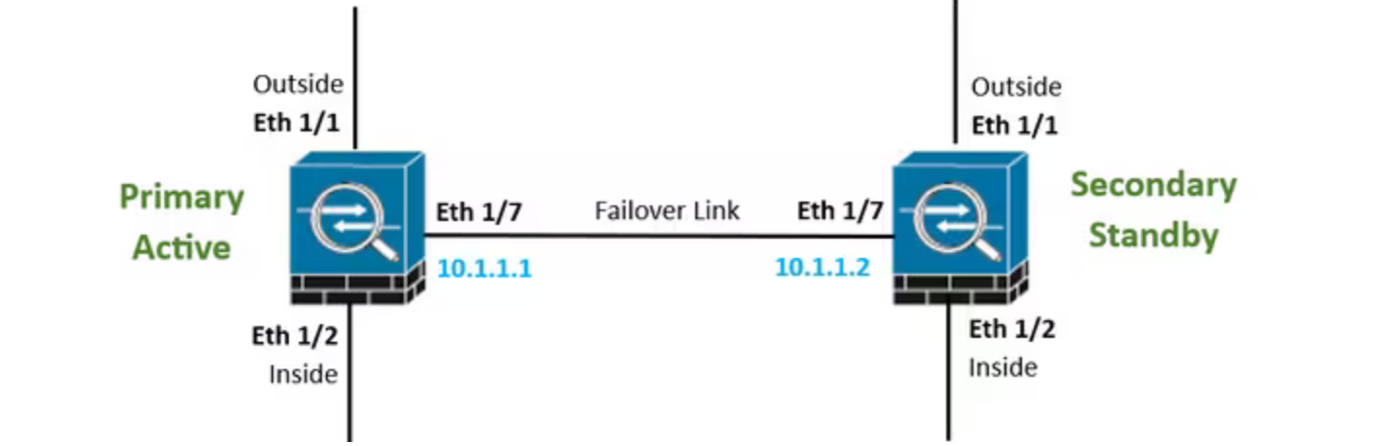
Illustrative simplified topology
High Availability Configuration
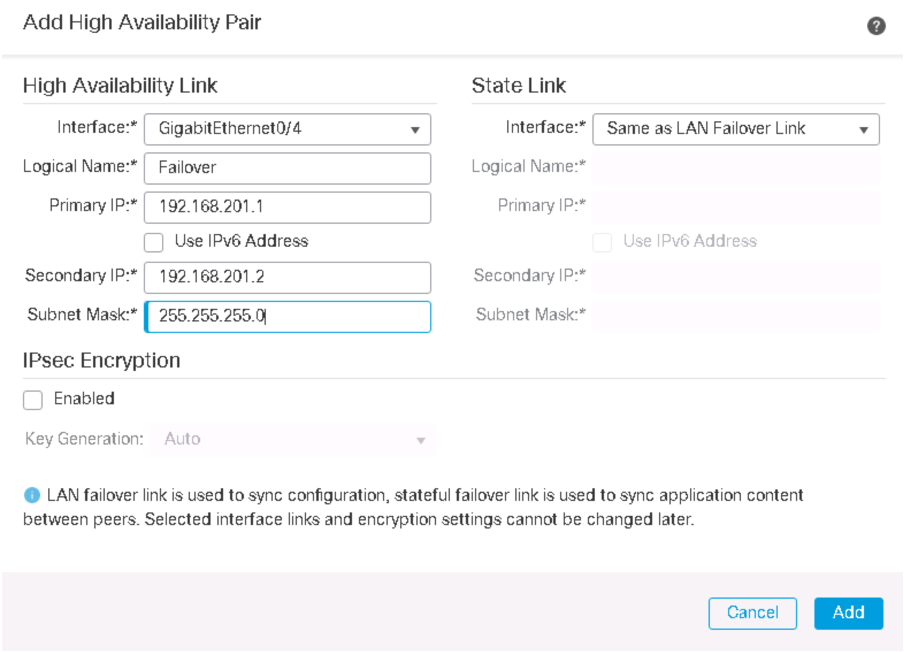
Dedicated HA links, synchronization settings, and Active/Standby pairing.
Security Policy Management
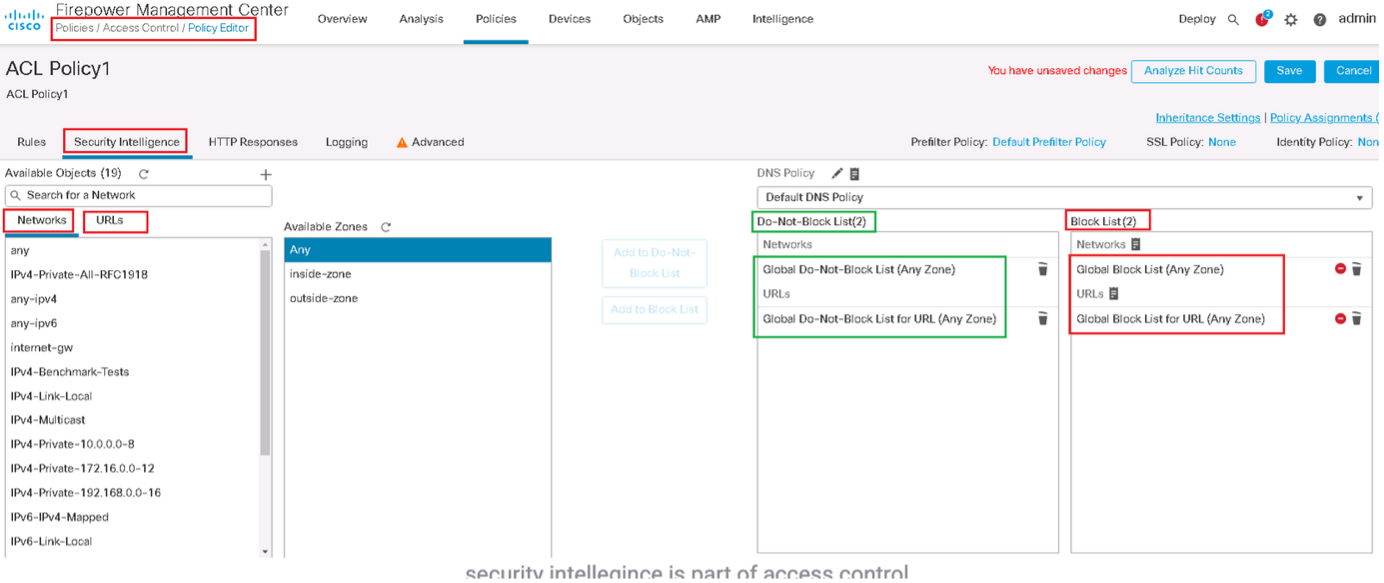
Centralized policy management, NAT configuration, and synchronized security rules.
Our Implementation Approach
Assess
Reviewed the existing firewall architecture, network requirements, and acceptable failover targets.
Design
Designed the Active/Standby topology, management connectivity, HA links, routing, and synchronization.
Deploy
Installed and configured Cisco FTD firewalls, software, management interfaces, and HA connectivity.
Synchronize
Configured HA pairing, session replication, security policies, NAT rules, and routing.
Validate
Tested firewall failover, session continuity, network performance, and security enforcement.
Optimize
Fine-tuned failover settings, enabled FMC monitoring, and delivered operational documentation.
Technical Challenges & Solutions
Overcoming Critical High Availability Challenges.
HA Link Instability
Challenge: Intermittent HA link failures occurred during the initial configuration. Solution: Replaced faulty cables and verified physical connectivity to establish reliable communication between the firewall pair.
Session Synchronization Latency
Challenge: Session synchronization delays affected failover responsiveness. Solution: Fine-tuned synchronization settings and timeout parameters to improve failover behavior and reduce disruption.
Security Policy Synchronization Delays
Challenge: Delays in policy replication created potential inconsistencies between the firewalls. Solution: Optimized the synchronization process and used Cisco FMC to verify consistent configuration and policy replication.
Monitoring, Optimization & Handover
Continuous Visibility and Reliable Firewall Operations.
Centralized HA Monitoring
Cisco Firepower Management Center provided visibility into firewall health, synchronization status, and failover events.
Logging & Alerting
Centralized logs and alerts helped the client's team identify HA issues and respond to firewall events.
Failover Performance Optimization
HA settings were tuned toward the client's target failover window of 30–60 seconds, with traffic and session behavior tested during role transitions.
Documentation & Knowledge Transfer
Delivered network diagrams, configuration records, troubleshooting procedures, and HA operational guidance.
Results & Business Impact
Stronger Network Resilience. Continuous Security Protection.
Successful HA Deployment
Established an operational Cisco FTD Active/Standby firewall pair with synchronized configurations.
Validated Failover
Failover testing demonstrated successful standby takeover without noticeable service disruption in the reported tests.
Improved Network Resilience
Reduced the firewall single point of failure and strengthened continuity for critical network services.
Consistent Security Enforcement
Maintained synchronized security policies and network protection across the HA pair.
Business Impact Summary
The deployment strengthened the client's network availability and security continuity through automated firewall failover, synchronized configurations, and centralized monitoring. The resulting architecture reduced reliance on a single firewall and provided a more resilient foundation for business-critical network operations.
Tools & Technology Used
Cisco Firepower Threat Defense
Cisco Firepower 4100 Series
Cisco Firepower Management Center
Active/Standby HA
Stateful Failover
HA Synchronization Links
Access Control Policies
NAT Rules
OSPF / BGP
SNMP
Syslog
FTD HA Configuration Tools
Cisco Firepower Threat Defense
Cisco Firepower 4100 Series
Cisco Firepower Management Center
Active/Standby HA
Stateful Failover
HA Synchronization Links
Access Control Policies
NAT Rules
OSPF / BGP
SNMP
Syslog
FTD HA Configuration Tools
Conclusion
Building a More Resilient and Secure Network Foundation.
The Cisco FTD High Availability deployment provided the client with a more dependable firewall infrastructure designed to minimize downtime and maintain security enforcement during network disruptions.
By implementing Active/Standby redundancy, session synchronization, centralized policy management, and comprehensive failover testing, UI Operations strengthened the client’s network resilience and established a scalable foundation for future operational requirements.
RELATED CASE STUDIES
Explore More Case Studies
LET’S BUILD WHAT’S NEXT
Is Your Network Ready for the Unexpected?
From firewall high availability to network security architecture and infrastructure resilience, UI Operations helps businesses build secure, reliable, and future-ready networks.